Rainy Season in the Comox Valley: How to Keep the Mud Outside Where It Belongs.
You know that moment when you’ve just cleaned the floor, then someone comes through the door and leaves a trail all the way to the kitchen? And somehow, nobody knows who did it.
Rainy season gives us plenty of those moments. Here in the Comox Valley, a quick trip outside can bring back wet shoes, muddy cuffs and enough grit to make you wonder why you bothered.
I’d rather make the doorway work a little harder than spend every evening mopping. Here’s what helps.
1. Why everything gets dirty faster when it rains
Wet ground sticks to the grooves in your shoes. Water helps carry that dirt indoors, where it gets spread around with every step. Once the muddy patches dry, you’re left with loose grit that can travel even farther.
Add dripping coats, damp bags and a few extra trips through the door, and the entrance gets busy fast. It’s not that you’ve suddenly forgotten how to keep a house clean. More mess is arriving, more often.
The useful bit? You don’t have to tackle the whole house every time it rains. Start where the dirt comes in.
2. Put a mat on both sides of every entrance
One little mat at the front door has a lot being asked of it. I’d give it some backup.
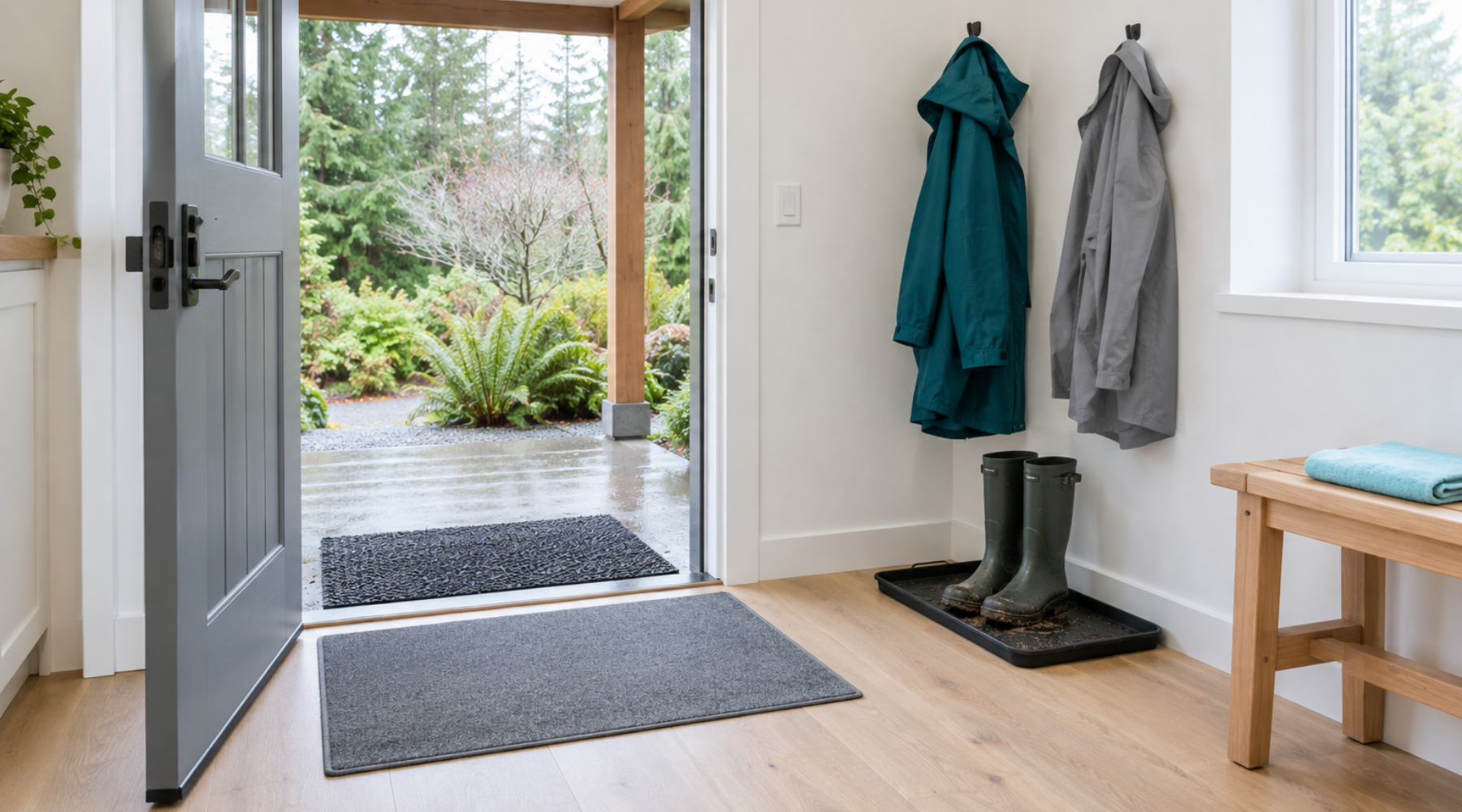
Put a sturdy scraping mat outside each entrance you actually use, including the back door or garage entrance. Choose one that stays put and lets you work dirt out of your shoe treads. Inside, use an absorbent mat with a non-slip backing that suits your flooring.
Make both mats big enough to stand on properly. If you can step straight over them without trying, they’re easy to miss when your arms are full of groceries.
Then make shoes off at the door the usual routine. Wipe, step inside, take them off. Keep slippers nearby if cold floors make that a hard sell. I find a convenient alternative works better than a speech.
Check the mats regularly, too. Shake out or clean them according to their care instructions, and let wet ones dry. A soaked, muddy mat can start passing the mess along instead of catching it.
3. Give wet boots and coats somewhere to land
You don’t need a beautiful mudroom. You need somewhere to put wet things that isn’t the nearest chair.
A boot tray, a few hooks and a washable towel can do plenty. Put the tray close enough to the door that nobody has to cross the room to reach it. Keep the walkway clear so getting your shoes off doesn’t become a balancing exercise.
Hang wet coats with a little space between them, rather than piling them together. Empty pooled water from the boot tray and wipe underneath it when needed. Check beneath damp mats, too, especially on floors that shouldn’t stay wet.
If you have a dog, keep a paw towel within reach. If you have kids, put their hooks where they can actually reach them. I’m all for a system that doesn’t require you to supervise every arrival.
4. Use tools that pick dirt up, then work down
Once dirt gets past the door, the goal is to remove it without carrying it around the room. This is where a few good tools and the order you use them matter.
I like microfibre cloths for dust and everyday surface dirt because their fine fibres help catch and hold it. For suitable surfaces, use a lightly damp cloth, not one that’s dripping wet. Follow the surface’s care instructions, especially with wood or delicate finishes.
Fold the cloth so you have several clean faces to work with. When one side gets dirty, turn to a fresh side. Switch cloths when needed. Even a good cloth starts smearing if you keep asking a dirty patch to do more work.
Keep bathroom cloths separate from kitchen cloths, and wash them according to their care labels.
For dry grit and dust, a vacuum with a HEPA filter is a useful choice. The filter helps capture fine particles that reach it, but the machine’s seals and upkeep matter too. Keep the filter maintained as directed, empty the bin or change the bag when needed, and check that the vacuum suits your flooring.
Don’t vacuum puddles or wet mud with a machine designed only for dry use. Lift wet clumps carefully with an appropriate cloth or tool first, and check the vacuum’s instructions before tackling anything damp.
Then work from top to bottom: higher shelves and surfaces first, lower furniture next, floors last. That way, anything you loosen above gets picked up below. Vacuum loose grit before damp-mopping suitable floors.
I know it’s tempting to start with the obvious muddy floor. But dusting the shelf afterwards just gives you a small, annoying reason to clean it twice.
5. Keep the routine small, and get help if you want it
A quick check of the entrance, a fresh cloth and a little attention to the busiest spots can help between bigger cleans. You don’t need to turn every rainy afternoon into a cleaning project.
If you’d like a hand, Betty’s Best Cleaning is locally owned and serves Comox, Courtenay, Cumberland and Campbell River. Our General Deep Clean is a room-by-room refresh, including dusting, sanitizing bathrooms and kitchens, and polishing floors. Weekly or bi-weekly maintenance cleans are available for homes that have already had a deep clean.
You can book at bettysbestcleaning.ca or send us a message whenever you’re ready. No pressure. I’m happy to help you figure out what fits your home.