How to Protect Your Floors Like a Professional
How to Protect Your Floors Like a Professional
Living right here in the Comox Valley means we get to experience some of the most stunning natural landscapes in British Columbia. From misty morning walks along the Courtenay River to weekend hikes up Mount Washington and sandy strolls by the ocean in Comox, our environment is nothing short of breathtaking. But all that gorgeous west coast living also means our floors take quite a beating. Between the seasonal rains, winter slush, stray pebbles from our local driveways, and the daily hustle of family life, your home flooring works harder than almost any other surface in the house.
At Betty’s Best Cleaning, we spend our days inside homes, vacation rentals, and local businesses across the valley, and nothing breaks our hearts quite like seeing gorgeous hardwood, sleek tile, or durable vinyl compromised by preventable wear and tear. Your floors are a major investment in your property, and keeping them looking exceptional does not require industrial machinery or back-breaking labor. It simply takes a bit of local know-how, the right habits, and a proactive maintenance mindset. We want to share our professional insights so you can safeguard your surfaces and keep your home looking its absolute best year-round.
Step One: Know Your Flooring Type Inside and Out
Before you purchase a single bottle of cleaner or grab a new attachment for your vacuum, you need to understand exactly what material is underfoot. Treating every floor in your house the exact same way is one of the fastest paths to premature damage. Different materials have unique structural compositions, moisture tolerances, and finish requirements.
- Solid and Engineered Hardwood: Prized for their timeless beauty, wood floors are sensitive to excess moisture and sharp impacts. They rely on protective factory or site-applied finishes to shield the natural timber underneath.
- Laminate and Vinyl Plank: These popular options offer incredible durability and mimic natural wood or stone. While luxury vinyl is highly moisture-resistant, standard laminate has a core that can swell if water is left standing.
- Ceramic and Porcelain Tile: Extremely tough and water-friendly, tile surfaces are resilient, though their vulnerable grout lines require specialized care to prevent staining and grime buildup.
- Carpeting: Soft and insulating, carpets trap dust and grit deep within their fibers, demanding routine deep extraction and specialized vacuuming strategies.
Take a walk through your home and map out where each material lives. Knowing your flooring type ensures you never accidentally apply a harsh solvent to a delicate finish or use a soaking-wet mop where only a damp cloth will do.
Stopping Dirt at the Door: The First Line of Defense
The single most effective way to protect your floors does not happen with a cleaning product at all. It happens right at your threshold. Tiny particles of sand, grit, and gravel act like microscopic sandpaper under the soles of your shoes. Every time someone walks across your floor with outdoor debris stuck to their footwear, those tiny mineral bits grind away at your protective floor finishes.
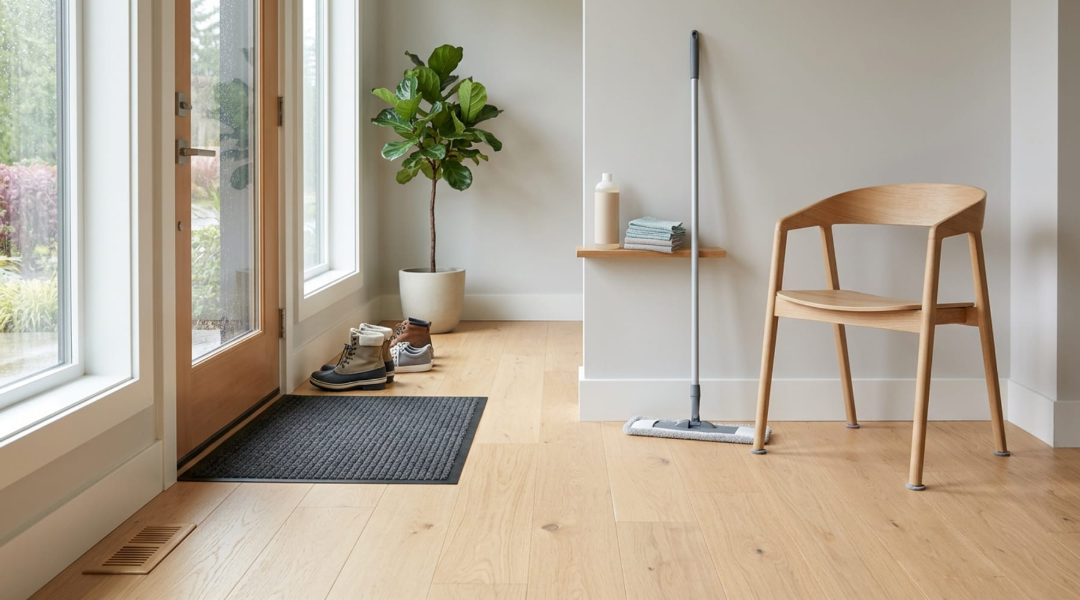
Implementing a strict outdoor footwear removal policy is a game-changer for Comox Valley homeowners. Create a welcoming, organized drop zone right inside your entryway with designated shoe racks, boot trays, and comfortable seating. Pair this habit with high-quality entrance mats both outside and inside your exterior doors. Outside mats scrape heavy mud and debris off shoes, while inside mats trap lingering moisture and fine dust. Shake and vacuum these mats weekly to ensure they do not become saturated and transfer dirt right back onto your floors.
Conquering Canadian Weather: Rain, Snow, and Road Salt
Living on Vancouver Island means dealing with plenty of wet weather. When autumn and winter arrive, our entryways transform into landing pads for driving rain, heavy slush, and whatever de-icing agents municipal crews use on local roads. Road salt and chemical ice melters are notorious for leaving stubborn white crusts on floors and chemically degrading protective finishes if they are left sitting.
When bad weather strikes, vigilance is your best friend. Keep a absorbent towel right by the front door to quickly wipe up puddles tracked in by family members or pets. If you notice salt residue drying on your entryway tile or hardwood, do not let it linger. Address it promptly by wiping the area with a slightly damp, microfiber cloth and a manufacturer-approved cleanser. Prompt action prevents mineral rings from etching into wood finishes or staining porous grout lines.
Mastering Floor-Safe Vacuuming and Sweeping Techniques
Daily or frequent sweeping is essential to remove loose grit before it can scratch your floors. However, the tools you choose matter just as much as the frequency. Using an old broom with stiff, abrasive bristles can push dirt around while dulling the sheen of your flooring over time.
Instead, look for soft-bristled brooms or, even better, high-quality microfiber dust mops that trap dust and pet hair effortlessly. When it comes to vacuuming, ensure your vacuum cleaner is equipped with the correct settings for your specific floor type:
- Turn off the rotating brush roll (beater bar) when moving from carpets onto hard surface floors like hardwood, tile, or luxury vinyl plank. A spinning beater bar can scratch hard finishes and splinter wood over time.
- Use soft rubber or felt wheels on your vacuum canister to prevent scuffing as you pull it behind you.
- Regularly check the bottom of your vacuum attachments for embedded pebbles or sharp plastic burrs that could scratch delicate surfaces.
Choosing and Testing Approved pH-Appropriate Cleaners
Walking down the cleaning aisle at the local hardware store or supermarket can be overwhelming. There are hundreds of floor cleaners on the market, but using the wrong formula can strip away factory finishes, leave a sticky residue that attracts even more dirt, or permanently dull your floors.
Always check your flooring manufacturer’s guidelines before purchasing any cleaning solution. As a general rule, look for pH-neutral cleaners designed specifically for your surface type. Avoid harsh universal cleaners, bleach-based solutions, or ammonia on delicate wood and laminate surfaces.
Crucially, whenever you try a new cleaning product for the first time, always test it in an inconspicuous area. Apply a small amount of the cleaner inside a hallway closet, behind a door, or under a large piece of furniture. Wait twenty-four hours to check for any discoloration, dullness, or textural changes before using the product across your entire living space.
The Golden Rule of Wood and Laminate: Minimal Moisture
One of the most common mistakes we see homeowners make is drowning their wood and laminate floors in water during routine mopping. Wood is a natural, porous material that expands when wet and contracts as it dries. Excessive water can seep into the seams between planks, causing edges to warp, cup, or swell beyond repair.
When cleaning wood or laminate, less is always more. Adopt a damp-mopping technique rather than a wet-mopping one. Your mop pad should feel barely damp to the touch, similar to a wrung-out sponge, leaving a thin layer of moisture that evaporates within seconds. Never leave puddles of water sitting on a wood floor, and if spills happen during family dinners or kitchen prep, grab a dry cloth and blot them up immediately.
Safeguarding Surfaces: Furniture Pads and Protective Mats
Your furniture is heavy, and every time someone sits down on a dining chair, slides a sofa slightly to retrieve a dropped remote, or rolls an office chair across the room, immense pressure is applied to tiny points of contact on your flooring.
Protecting your floors from furniture friction is an easy, low-cost project that pays massive dividends. Head to your local hardware store and pick up a multi-pack of self-adhesive felt furniture pads. Apply them to the legs of all chairs, tables, couches, and heavy chests. Inspect these pads every few months, as dust and pet hair can embed in the felt over time, potentially turning them into mini sandpaper pads. Replace them whenever they wear thin.
If you have home offices with rolling desk chairs, invest in a clear, floor-safe protective mat. The constant rolling action of caster wheels will wear down even the toughest hardwood or vinyl finish over time, making a dedicated mat an absolute necessity.
Lifting Instead of Dragging: Moving Heavy Items Safely
Even with high-quality felt pads attached to your furniture legs, heavy items should never be dragged across hard surface floors. Dragging a heavy bookshelf, refrigerator, or sofa can catch hidden grit, tear vinyl, gouge wood, or crack ceramic tiles in a split second.
When rearranging your living room or deep cleaning behind major appliances, always lift furniture rather than slide it. For exceptionally heavy items that require two or more people to move, use specialized furniture sliders designed to distribute weight evenly across a smooth surface, or lay down heavy moving blankets to glide the item safely across the room. Taking these extra thirty seconds will save you from heartbreaking scratches and costly floor repairs.
Keeping Pet Nails Trimmed and Paws Maintained
We love our four-legged family members here in the Comox Valley, but our pets can be exceptionally hard on floors. Dogs and cats with overgrown claws act like miniature ice cleats every time they sprint down the hallway or greet you enthusiastically at the front door.
Establish a regular pet grooming routine that includes keeping nails neatly trimmed and filed smooth. If your dog has a habit of zooming across slippery hardwood surfaces during playtime, consider placing strategic runner rugs down high-traffic hallways to give them secure traction while protecting the floor underneath. Additionally, keep a towel by the door to wipe muddy paws after rainy walks before your pets dash onto clean carpets or delicate hardwood.
Protecting Floors During Home Renovations and Moves
Renovating your home or moving furniture in and out are high-risk events for your flooring. Paint drips, dropped tools, heavy boot traffic, and scraping drywall carts can turn a pristine floor into a construction zone disaster in minutes.
Before any major project begins, take the time to install comprehensive floor protection. Lay down heavy-duty builder paper, Ram Board, or interlocking protective floor tiles across all transit paths and work zones. Secure the edges securely with low-tack painter's tape that will not pull up finish when removed. Never use standard duct tape directly on finished wood or painted surfaces, as the aggressive adhesive can leave a gummy, destructive residue behind.
Setting Up a Simple, Stress-Free Maintenance Schedule
Consistency is the secret to keeping your floors in pristine condition without feeling overwhelmed. By breaking your floor care down into manageable daily, weekly, and monthly tasks, you can maintain a gorgeous home environment effortlessly.
- Daily Tasks: Shake out entrance mats, sweep or dry-mop high-traffic zones like kitchens and entryways, and immediately blot up any liquid spills or muddy paw prints.
- Weekly Tasks: Thoroughly vacuum all hard floors and carpets using proper attachments, damp-mop hard surfaces with your manufacturer-approved, pH-neutral cleaner, and inspect high-traffic entry mats for grit accumulation.
- Monthly Tasks: Check all felt furniture pads for wear, inspect rolling chair mats, and perform a deeper inspection of corners, baseboards, and grout lines for any developing grime buildup.
Following manufacturer instructions for every product and machine you use guarantees that you are supporting your flooring investment rather than accidentally damaging it.
Experience the Difference of Professional Support in the Comox Valley
Protecting your floors like a professional comes down to developing smart daily habits, using the right tools, and staying consistent with your maintenance schedule. When life gets busy and keeping up with deep cleaning feels like an uphill battle, you do not have to carry the load alone. Whether you are managing a busy family home in Courtenay, running a local business, or maintaining a vacation rental property in Comox, our dedicated team is here to help.
Ready to give your floors and your entire home the meticulous care they deserve? Book your professional cleaning service with Betty’s Best Cleaning today and experience the peace of mind that comes with true local reliability.